Showing posts with label video. Show all posts

Monday

Acceso a Liveworksheets

                   
Mirad el siguiente vídeo si os he enviado el usuario y contraseña para acceder a las actividades. 


Identificación de alumno/a

Usuario: 

Contraseña: 


Proporcionado por Live Worksheets

What is Coronavirus?


OUR HEROES


Wednesday

Verb Tenses Review

Tuesday

Reported Speech 2


Reported Speech Statements ex 

Reported Speech Orders and Commands ex 

Reported Speech Questions ex

Agendaweb
Reported Speech, an interactive worksheet 


Sunday

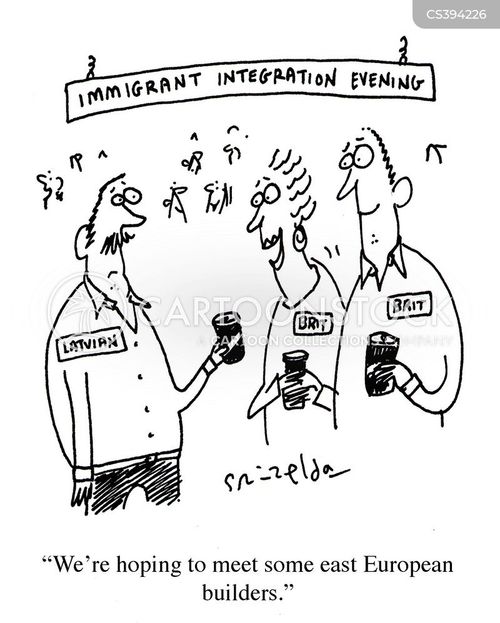
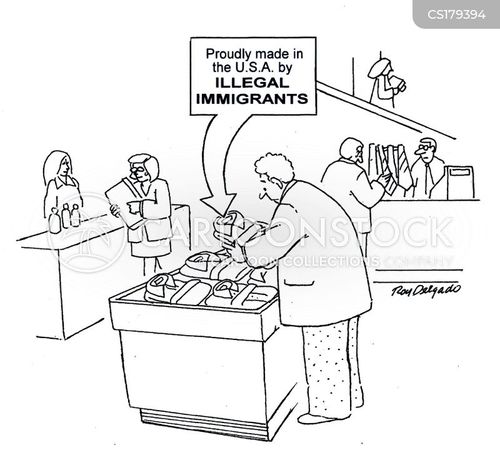
Vocabulary – Immigrate, Emigrate, Migrate


Vocabulary – Immigrate, Emigrate, Migrate ·

Immigrate, emigrate or migrate? These three words look similar and have similar meanings. In this vocabulary lesson, you will learn about the meanings and differences between these three commonly mixed-up words. After watching, you'll feel confident when you use these words.


The Brexit 2016 Referendum

On 23rd June 2016, Britain decided by a referendum to leave the European Union, the so-called Brexit option. The opinion polls showed the race was a close one and the national debate still gets louder and louder. But what does it all mean?


Let's hold a debate/discussion on whether the UK should remain in the EU or not. Shall we vote?

Brexit: All you need to know about the UK leaving the EU (BBC)


BREXIT

brand   ·   Britain   ·   brought   ·   characters   ·   consequential   ·   continental   ·   could   ·   countries   ·   eight   ·   empire   ·   front   ·   immigration   ·   include   ·   London   ·   marine   ·   middle   ·   movement   ·   other   ·   physically   ·   really   ·   risk   ·   second   ·   that's   ·   they'd   ·   undemocratic   ·   union   ·   whether   ·   while   ·   wrong?  
1.Could Britain  be about to leave Europe? Not literally, of course. Its land mass may have detached itself from  Europe some  thousand years ago, but whatever happens, Britain will stay  more or less where it is.
2.However, on June 23rd voters will be asked  they want to remain in the European Union, or if  rather head for the exit in a Brexit. And it  be close — the country is split down the  .
3.Those who want to leave invoke the age of  , wartime spirit, and Margaret Thatcher. They say the European  is overbearing, costly and  . And  many of their best friends are European, they worry a lot about  .
4.Those who want to remain are keen to remind people that as glorious as the  World War was for  , it's probably best we don't have a rematch. They say that the EU has  a historically bloodthirsty continent together, and its single market and free  rules have benefitted everyone. Leaving would put all that at  .
5.So, who's saying what? Well, those in favour of remaining in the EU  the leaders of all the main UK political parties, all the leaders of all the other EU  , Barack Obama, the IMF and, well, Emma Thompson. On the  side, a more, how can we put it, eccentric cast of  . The former mayor of  Boris Johnson, UKIP leaders and serial EU hater Nigel Farage, US presidential hopeful Donald Trump,  Le Pen of the French National  and ... Michael Caine. One thing everyone can agree on is that it's the biggest and most  decision British voters will make in a generation.  if you don't count a recent public vote to name our  new £300 million pound Arctic explorer Boaty McBoatface. What could go 

Wednesday

Relationship Phrasal Verbs

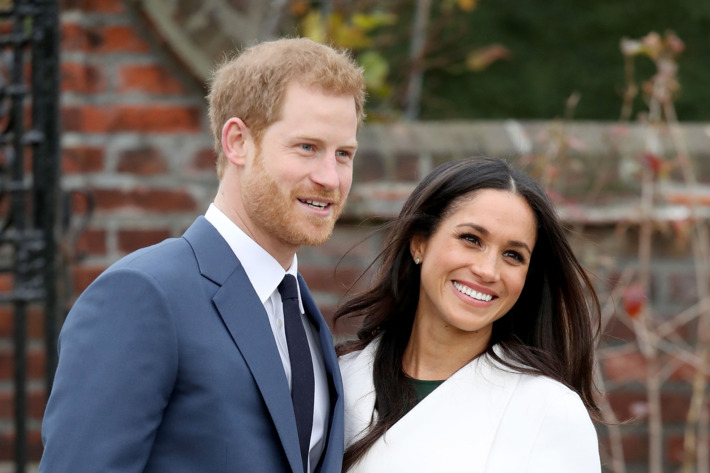
There's a very high-profile wedding coming up!
 It's the perfect time to look at relationship phrasal verbs!


Monday

Jane Eyre


The novel and the quote above were written in 1847 during the Victorian period in Britain by a woman writer who published her work under the pseudonym of Currer Bell. Why did she publish her work that way?
You are about to travel back in time to a world very different from the one we live in today.

You will have to organize your tasks and form groups of four/ six students to find out how living in the Victorian England was. Each group will eventually share what they have learned about this period.

Group 1 Victorian Era: general overview
Group 2 Industrial Revolution and scientific progress
Group 3 The British Empire: general overview
Group 4 Education and schools in Victorian Age
Group 5 Victorian society and class: general overview
Group 6 Victorian society: women's roles
Group 7  Victorian literature: Charlotte Brontë & other writers

Make a poster, a powerpoint, a glogster, thinglink , Powtoon, Genial.ly, or choose another interactive tool to present your findings. Send me your final product before presenting to the class.

WEBQUEST


A timeless classic, also a critique of Victorian assumptions about gender and social class, is now commonly accepted in the canon of English literature and widely studied in secondary schools. Not surprisingly, Jane Eyre became one of the most successful novels of its era, both critically and commercially.


The novel has been adapted into a number of other forms, including theatre, film, television - and at least two full-length operas. 


Tuesday

Back 2 School


RULES FOR THE ENGLISH CLASS

1. Listen to the teacher.
2. The teacher is there to help you so ask him/her.
3. Use English as much as you can, inside and outside the classroom ( in the sources available e.g. internet, magazines, TV, newspapers, books...).
4. Read instructions carefully and follow them.
5. Try to guess vocabulary from context.
6. Keep a vocabulary notebook and store vocabulary in theme groups and/or phrases, no lists.
7. Always use reference books/ notes when doing your work until you learn the subject.
8. DO NOT just fill gaps.Always check your work using reference books/notes.
9. Always take your time. Never do your work in a hurry.
10.Never copy your classmate’s work.
11.Organise your work so you learn step by step.