Showing posts with label vocabulary. Show all posts
Showing posts with label vocabulary. Show all posts
Sunday


Saturday



Friday
British English versus American English
The English language was first introduced to the Americas by British colonization, beginning in the late 16th and early 17th centuries.
The language also spread to numerous other parts of the world as a result of British trade and colonization and the spread of the former British Empire, which, by 1921, included about 470–570 million people, about a quarter of the world's population.
Written forms of British and American English as found in newspapers and textbooks vary little in their essential features, with only occasional noticeable differences. (Source: Wikipedia)
The main difference between British English and American English is in pronunciation. Some words are also different in each variety of English, and there are also a few differences in the way they use grammar.


The song is most famous for its “You like to-may-toes /təˈmeɪtoʊz/ and I like to-mah-toes /təˈmɑːtoʊz/” and other verses comparing their different regional dialects.
The differences in pronunciation are not simply regional, however, but serve more specifically to identify class differences. At the time, typical American pronunciations were considered less "refined" by the upper-class, and there was a specific emphasis on the "broader" a sound. This class distinction with respect to pronunciation has been retained in caricatures, especially in the theater, where the longer a pronunciation is most strongly associated with the word "darling."
Enjoy the video!
Which words do you know that are spelled differently but have the same
meaning? Name as many as you can.
 A different version :-)
Which words do you know that are spelled differently but have the same
meaning? Name as many as you can.
Monday
Differences between DAMAGE, HURT, INJURE & HARM
Es fácil confundirse con estas cuatro palabras en #inglés.— Brendan 𝕯𝕸 Ryan 🇮🇪🇪🇸🇪🇺 (@BrendanDMRyan) June 8, 2020
Las diferencias entre ⤵️
1⃣Damage
2⃣Hurt
3⃣Injure
4⃣Harm
...explicadas en dos minutos pic.twitter.com/i5zUSDcPl7
Tuesday


Monday


1º Bach Unit 6 Grammar & Vocabulary
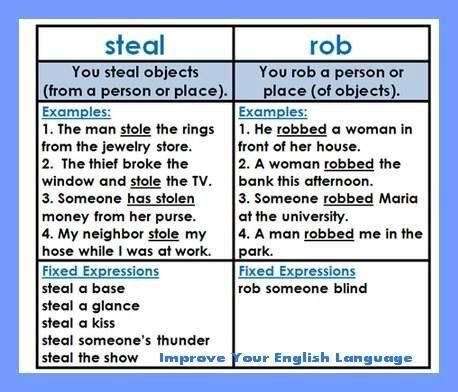
You have learned some verbs related to crime in unit 6. Test your knowledge with this interactive exercise. Click at the top right-hand corner to enlarge the window.


Exercise 1. Quiz. Exercise 2. Online quiz.
Exercise 3. Choose the right answer. Exercise 4. Complete
Exercise 5. Rewrite the sentence. Exercise 6. Follow the example 1.
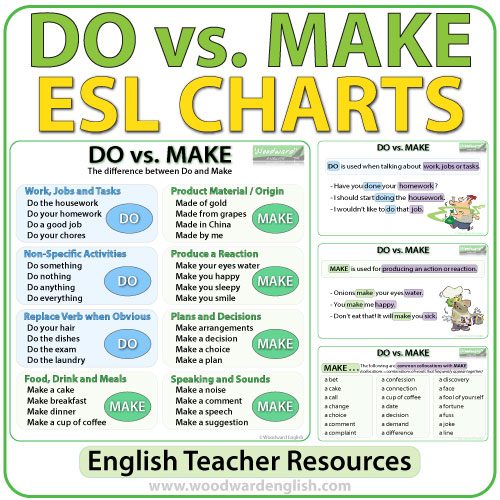
Exercise 7. Follow the example 2. Exercise. Let / Make / Have / Get

Link to the Passive Voice
Have Something Done / Causative Passive en español
Exercise 3. Choose the right answer. Exercise 4. Complete
Exercise 5. Rewrite the sentence. Exercise 6. Follow the example 1.
Exercise 7. Follow the example 2. Exercise. Let / Make / Have / Get



Wednesday

Tuesday

Sunday
Vocabulary – Immigrate, Emigrate, Migrate
Vocabulary – Immigrate, Emigrate, Migrate ·
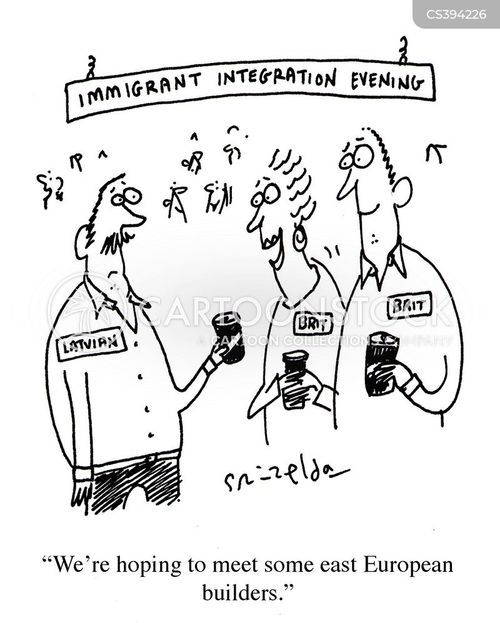
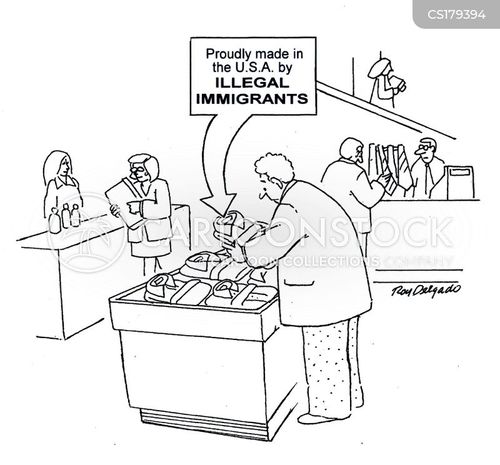
Immigrate, emigrate or migrate? These three words look similar and have similar meanings. In this vocabulary lesson, you will learn about the meanings and differences between these three commonly mixed-up words. After watching, you'll feel confident when you use these words.

Halloween is Coming!

- Halloween vocabulary
- More vocabulary on Halloween
- A crossword on Halloween
- A Treasure Hunt on Halloween

- Halloween History reading comprehension
- Halloween Cloze Test
- A Horror Story
- A Halloween Quiz**
- Another Quiz from Mansión de Inglés
- HALLOWEEN IN SPAIN
- Read your weekly Horoscope here– if you dare. It’s getting scarier each week! Hangman Game

Halloween Exercises 1
Halloween Exercises 2


Wednesday
Relationship Phrasal Verbs
There's a very high-profile wedding coming up!
It's the perfect time to look at relationship phrasal verbs!


It's the perfect time to look at relationship phrasal verbs!
Sunday
Compound Nouns
/Bart_Simpson_Compound_Nouns-57a25fe35f9b589aa93666ec.jpg)
They normally have two parts.
The first part tells us what kind of object or person it is, or what its purpose is.
The second part identifies the object or person in question.
You may have noticed that the compound noun can be written either as a single word (toothpaste), as a word with a hyphen (ccoking-oil), or as two words (paper clip). There are no clear rules about this. A good rule of thumb is to write the most common compound nouns as one word, and the others as two words.The second part identifies the object or person in question.
The rules on whether to put a hyphen, a space, or nothing between the words in a compound noun are inconsistent. For example:
- inkwell
, ink well
- fulltime
, full time
- waterbottle
Subscribe to:
Posts (Atom)